Dev - Reexamining Our Past Initiative
State Parks is working with community partners, including California Native American tribes, to examine and address historic wrongs and promote educational programs and exhibits that reflect the state's complex history and unique diversity. The department provides opportunities for the public to participate in and comment on this important effort. Individuals interested in subscribing to updates or who have a location that needs evaluation are asked to email the department at planning@parks.ca.gov. Learn more about the Reexamining Our Past initiative in this StoryMap. State Parks is looking at contested place names, monuments and interpretation in the California State Park System. This includes derogatory place names; inappropriate honorifics associated with the historical legacy of some of its monuments, statues and plaques; and inadequate interpretive programs or exhibits that fall short in fully contextualizing California’s history in state parks. The department is committed to addressing these issues and to removing or replacing names that don't reflect our values. Depending on the park feature, renaming entails different processes. All three of these processes involve public consultation but are subject to different approval authorities.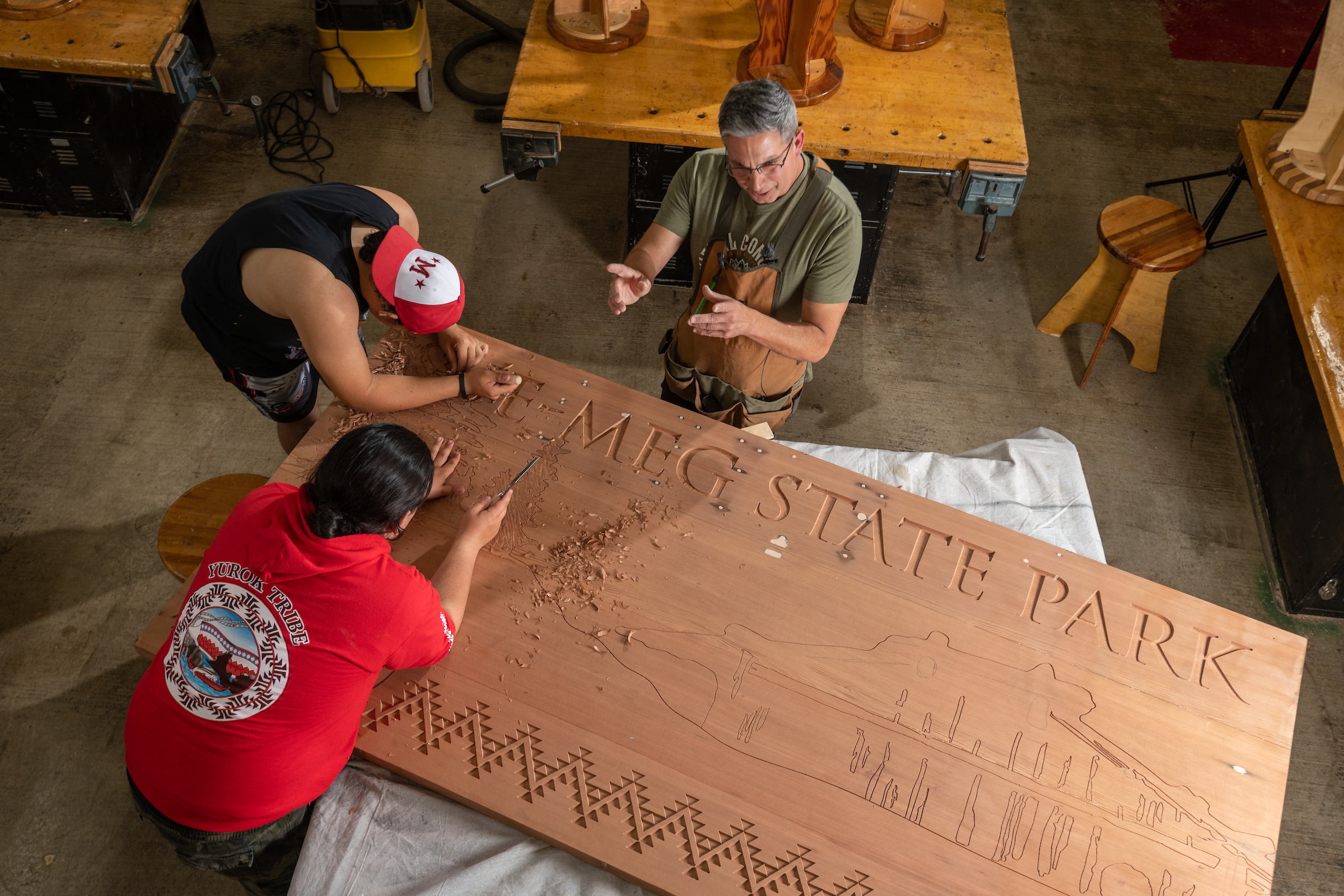 State Parks staff and Yurok tribal members create the new Sue-meg State Park sign.
Renaming Parks and Park Features
 State Parks is renaming a day-use site at Folsom Lake State Recreation Area to honor the history of African American miners in California during the Gold Rush. Courtesy California State Library, Sacramento.
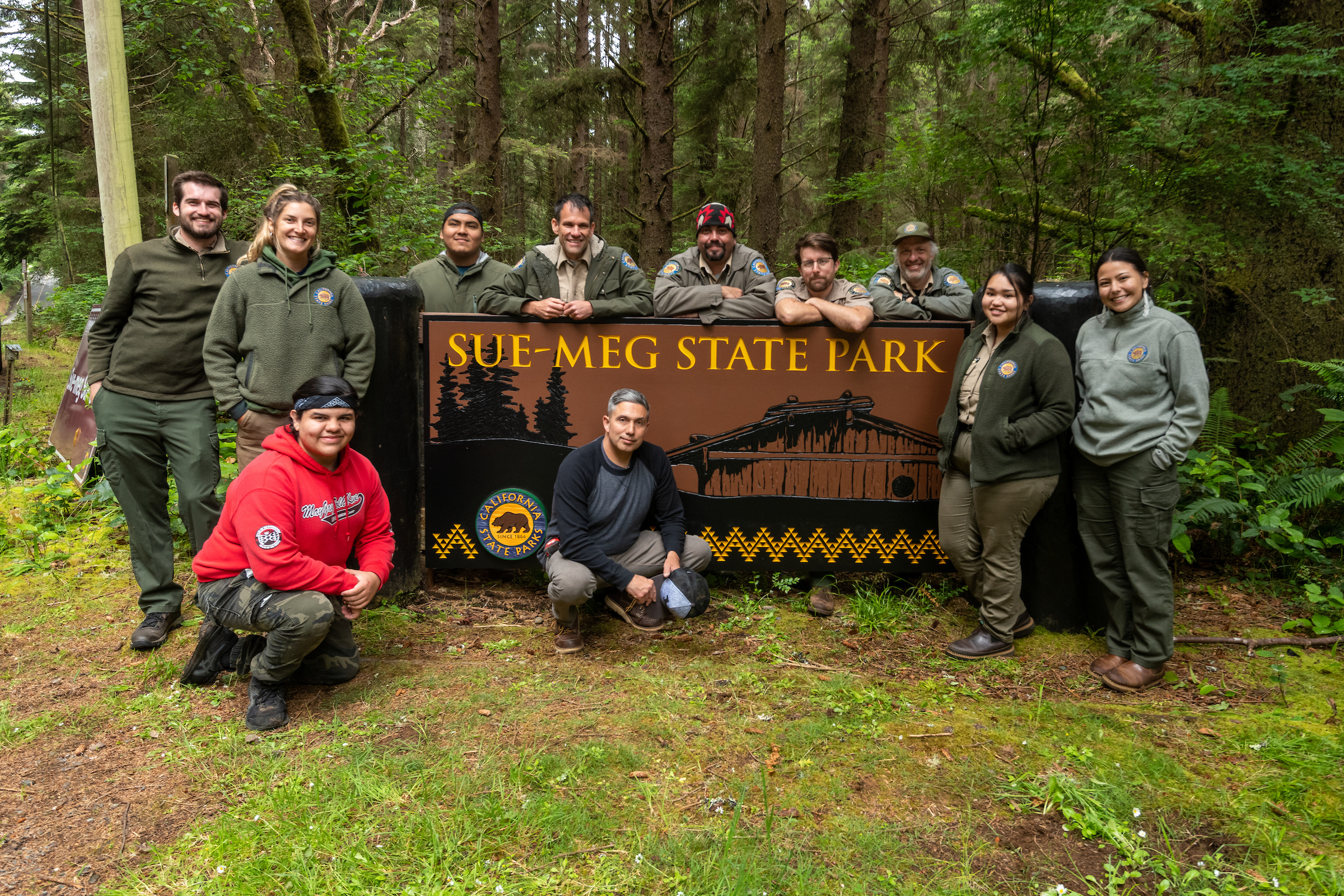 On Sept. 30, 2021, the California State Park and Recreation Commission voted to rename a state park to honor the place name used by the Yurok people since time immemorial.
State Parks works closely with California Native American tribes in the stewardship and interpretation of parks. Partnerships include Memorandums of Understanding (MOUs), Memorandums of Agreement (MOAs) and other agreements. Find a list of MOUs and MOAs here.Tribal Agreements
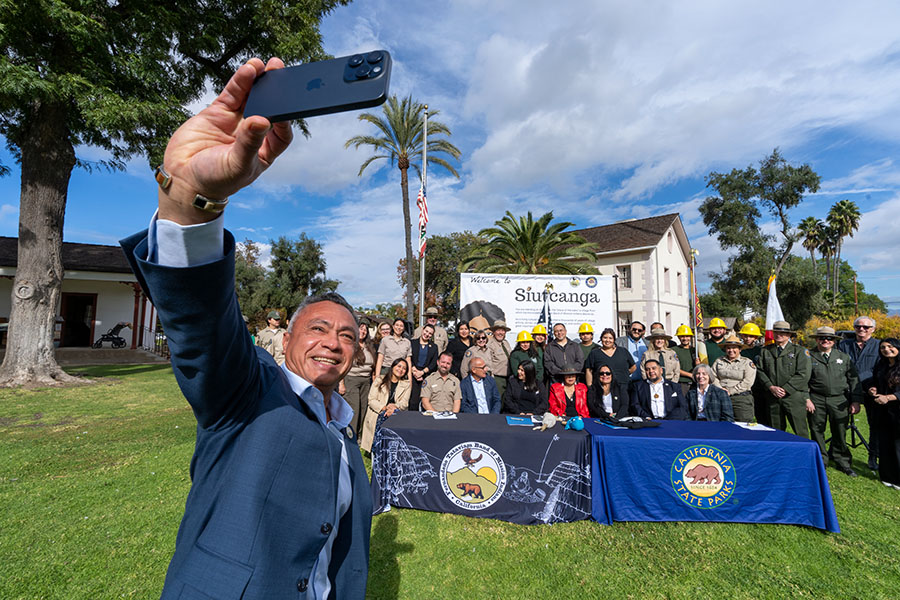 Fernandeño Tataviam Tribe and California State Parks signing MOU at Los Encinos State Historic Park
The Reexaming Our Past Initiative reflects a commitment to broadening the historical context and bringing forward those stories that were too often overlooked or marginalized in interpretation program and exhibits.Park Interpretation
Learn more about how individual state parks revised their interpretative approaches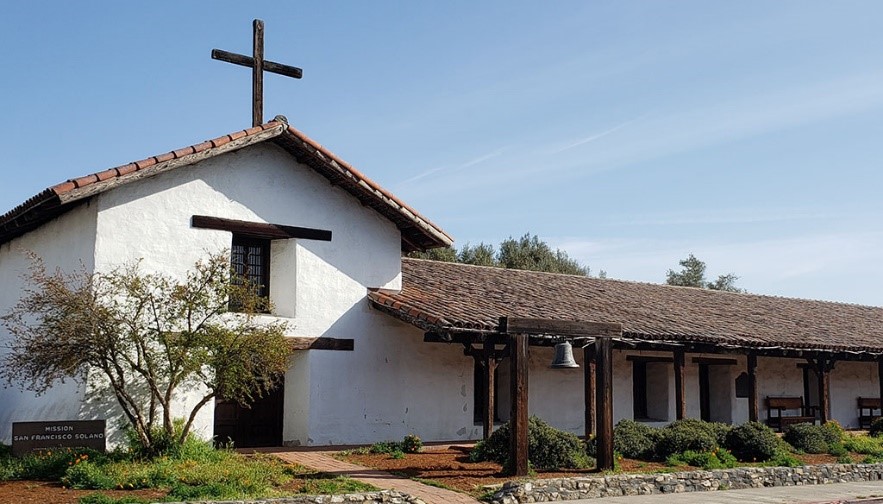 Sonoma Mission State Historic Park
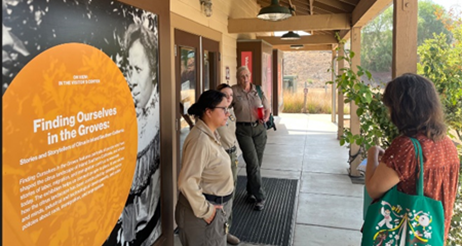 UC Riverside and State Parks team gathered in front of the visitor center at California Citrus State Historic Park showcasing the exhibit “Finding Ourselves in the Groves.”
Relevancy and History Program
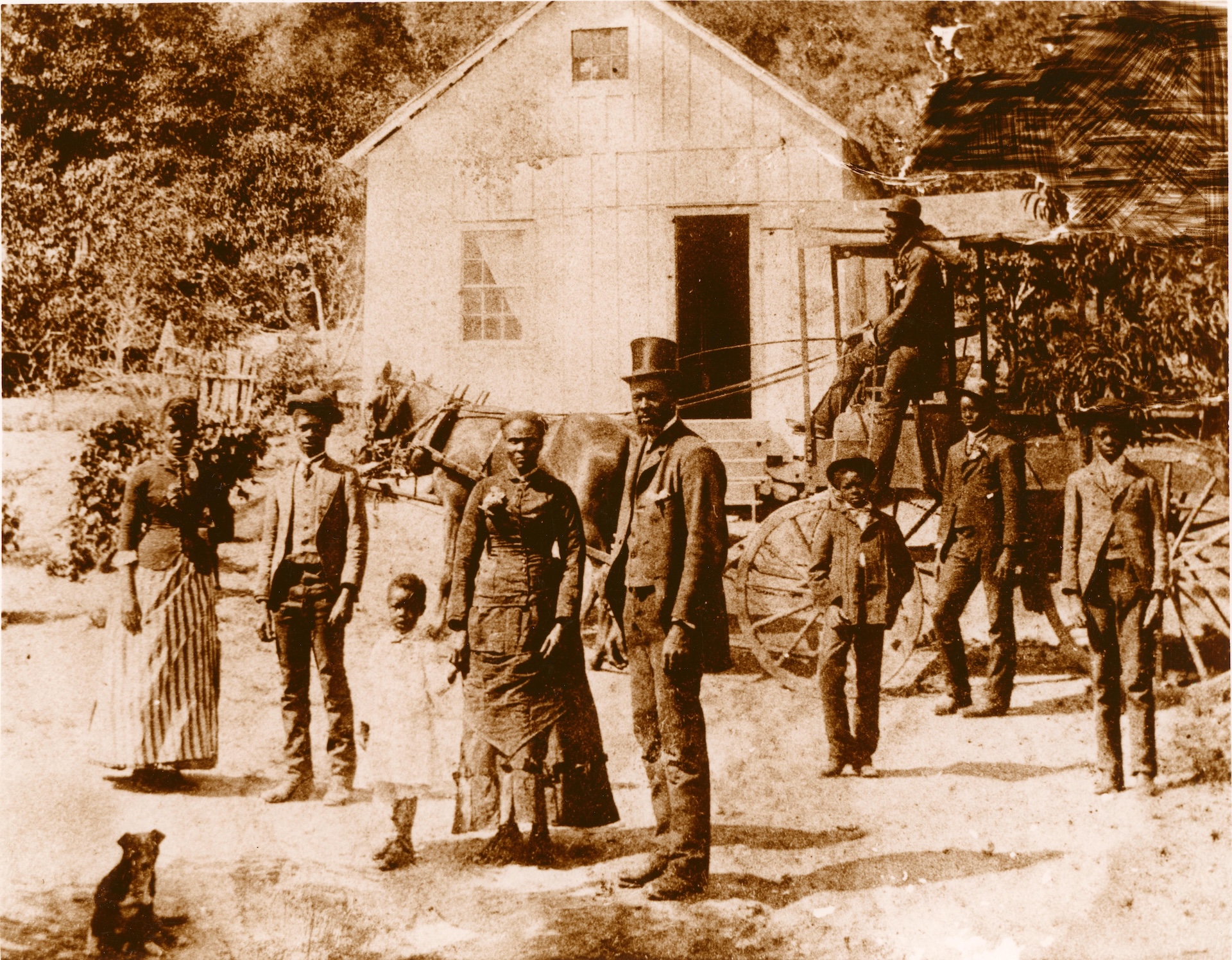 African American settlers at Coloma
African American History and Engagement
The African American History and Engagement project is a five-year collaborative effort (2022-2027) with the California African American Museum to research and recover histories, and design and implement innovative and engaging interpretive exhibits, in approximately 24 State Parks. The project will also institutionalize restoration of neglected histories through interpreter training programs and archival practices.
Through the Tribal Lands Acknowledgement, Interpretation and Exhibits Improvement Project, California State Parks seeks to strengthen tribal partnerships and connect the public with diverse tribal histories, cultures and contemporary experiences of California Native Americans. The project includes cocreating meaningful land acknowledgements in parks with tribes throughout the State of California and improving interpretation programs and exhibits in approximately 30 prioritized parks. California State Parks is working on the Tribal Lands Acknowledgement, Interpretation and Exhibits Project to honor Native American tribes’ ongoing connection to their ancestral land. With local tribes, meaningful land acknowledgment statements are being cocreated at parks throughout the state to use on new entry signage, at in-person events, and on parks websites and educational materials. The goals are to strengthen tribal partnerships and foster greater public visibility of these tribes. In 2023 and 2024, a series of government-to-government consultations was initiated across California. In 2024, over 50 consultations with tribes were held to discuss cocreating content for entry signage and land acknowledgements and to gather feedback on how better collaboration can be fostered with tribes. As of January 2025, 63 tribes have expressed interest in joining in this important effort. Looking ahead, California State Parks will continue collaborating closely with tribes to develop and refine the content for entry signage and land acknowledgements. Complete fabricating and installing of signs is expected by early 2027. California State Parks is working on the Tribal Lands Acknowledgement, Interpretation and Exhibits Project to better contextualize the culture, history and contemporary experiences of California Native Americans. With local tribes, State Parks is cocreating updated and new exhibits and interpretive content for museums and outdoor displays. The goals are to strengthen tribal partnerships and provide the public with accurate and inclusive information. In 2023, California State Parks started over 20 projects in parks throughout the state, including listening sessions with tribes, exhibit designs and new interpretation panels across parks. These projects, led by State Parks districts, focus on collaborating with tribes, where they have expressed interest, to create meaningful content. In 2025, California State Parks is kicking off new projects across parks that continue to be cocreated with tribes to share appropriate content and reflect their historical and contemporary experiences.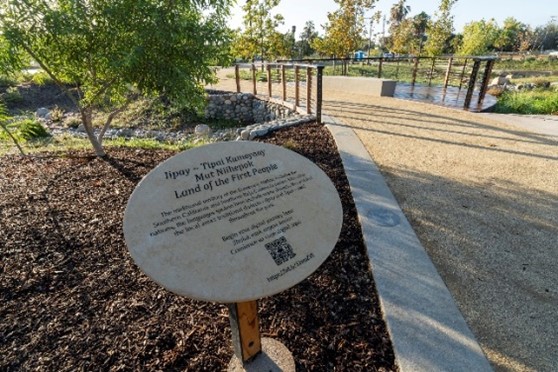 Indigenous panel
Tribal Lands Acknowledgements, Interpretation and Exhibits Improvement Project
Resources
Department Tribal Liaison and Consultation Policies