Western Snowy Plover
New! Western Snowy Plover Brochure
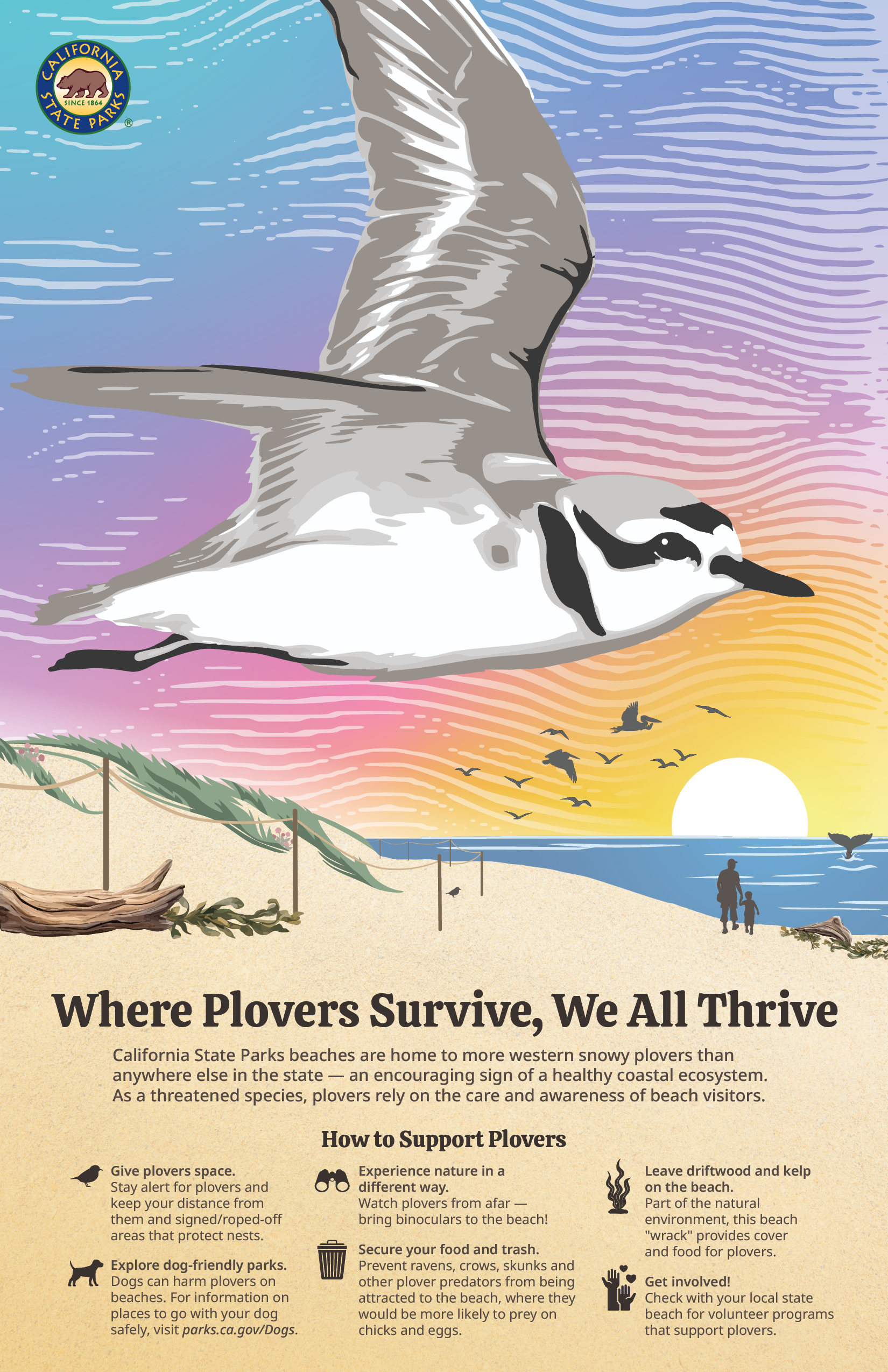
California State Parks beaches are home to more western snowy plovers than anywhere else in the state - an encouraging sign of a healthy coastal ecosystem. Although still listed as a threatened species, plovers rely on the care and awareness of beach visitors. Learn more below or check out the brochure!
Your Neighbor at the Beach
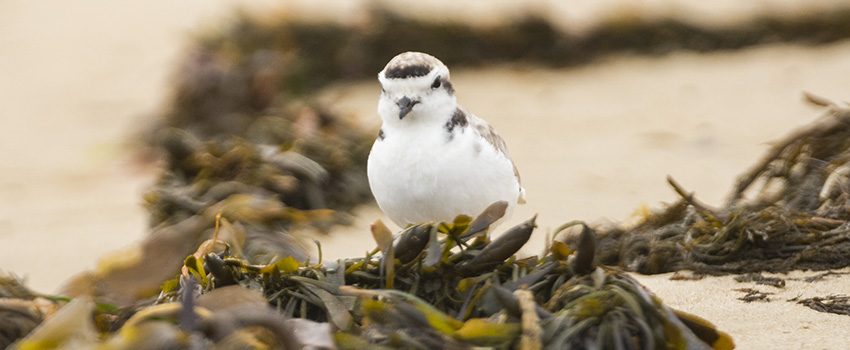
When you visit the coast, the western snowy plover can be hard to spot. Then, suddenly, a small shorebird darts across the beach, stopping abruptly to peck for insects and sand hoppers. In summer, tiny, sand-colored chicks follow their fathers along the dunes and shoreline in search of food and shelter.
Plovers are signs of a healthy beach that sustains many forms of life — where plovers survive, we all thrive. This little shorebird has long been a resident of California’s coast, but coastal development and heavy beach use led to its listing as a threatened species under the federal Endangered Species Act in 1993 and continue to threaten its survival.
Western Snowy Plovers and Their Lookalikes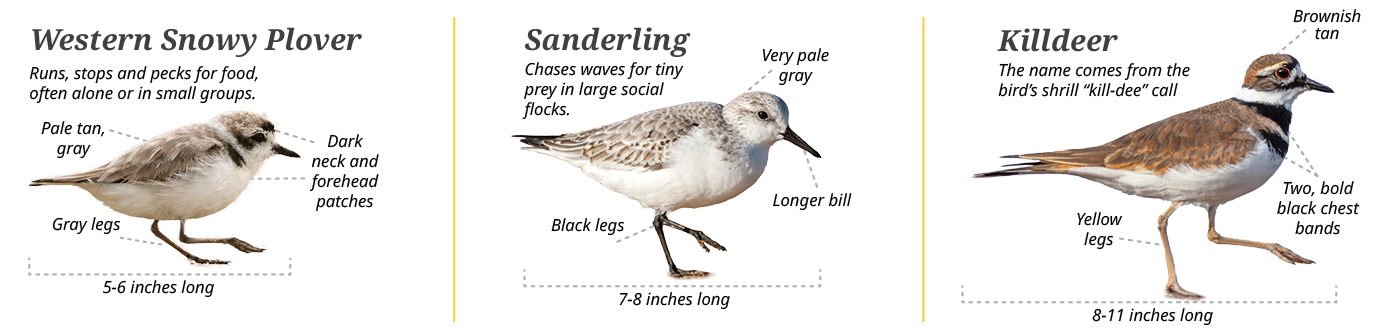
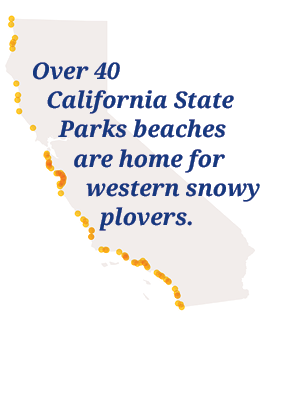 Protecting Snowy Plovers
State Parks scientists track breeding snowy plovers and their survival, informing conservation strategies and plover recovery. Other ways State Parks protects plovers and the beach:
- “Symbolic Fencing”: Roping off nesting areas and sensitive habitat.
- Beach Restoration
-
Removing invasive plants (e.g., ice plant and European beach grass)
-
Planting native species
-
Leaving kelp (“wrack”) on the sand provides food and shelter for plovers and helps maintain a healthy beach
-
- Outreach and Education: Raising awareness about how everyone can be a steward for California's beaches.
 Nesting in Plain Sight
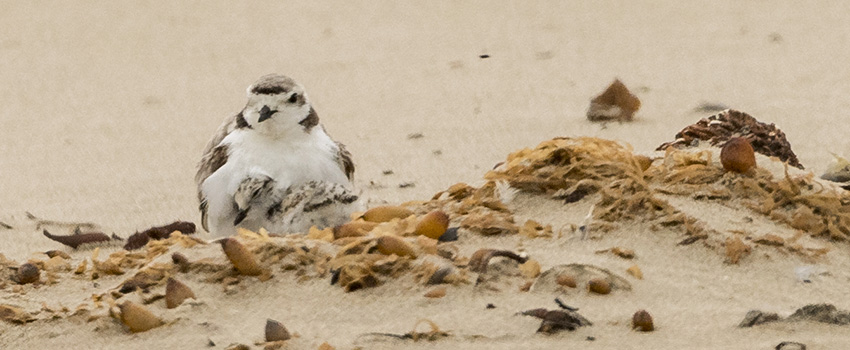
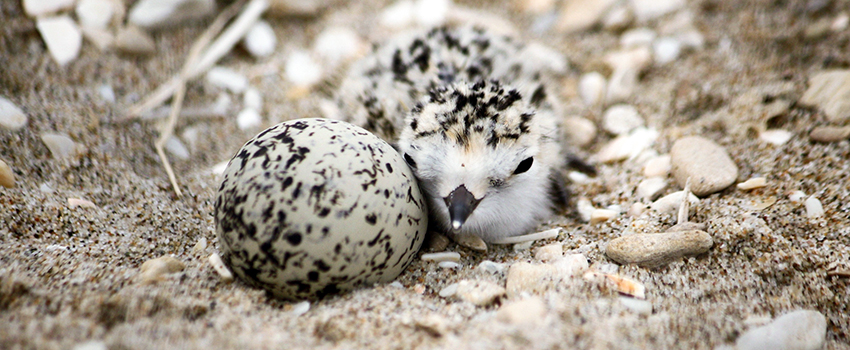
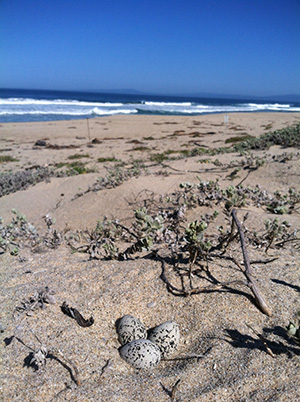
March to September is nesting season. Female plovers lay speckled eggs in shallow nests in the sand. These nests are camouflaged to fool predators, but makes them easy for people to overlook and accidentally disturb. Both plover parents share nesting duties. Once the eggs hatch, males are the primary caregivers for vulnerable chicks until they can fly at 30 days. Females often go on to start new nests with other mates.
Saving Plovers Saves Beaches
People and plovers share our beaches year-round, with nesting season overlapping the busy summer season that brings more than 50 million visitors to state beaches. Although western snowy plovers are already protected by state and federal laws, everyone can help safeguard the species and in turn, the beach.
Support a Healthy Beach for People and Plovers:
-
Respect Roped-Off Nesting Areas: Keeping your distance is important. Camouflaged nests and chicks, as well as sensitive native plants, can be crushed by unsuspecting footsteps. Sitting, flying kites, walking dogs or riding horses nearby can scare plover parents off nests — leaving eggs vulnerable to predators and weather.
-
Protect the Dunes: Roped-off plover nesting areas are often along sensitive dunes that need a chance to rebuild. Dunes safeguard against beach erosion and act as a sand “bank,” helping maintain the coastline for everyone.
-
Secure Trash and Food: Both people and plovers benefit from a trash-free beach. Properly disposing of litter and securing your food keeps ravens, gulls, skunks and other predators from being attracted to the beach, where they would be more likely to prey on chicks and eggs.
-
Share the Beach: Plover flocks need rest in the winter to successfully nest in the summer — any disturbance can have an impact. When you share the beach and give all shorebirds space, they can help keep the beach healthy, including foraging on invertebrates and balancing insect populations like sand flies.
The Hidden Impact of Dogs
Dogs are beloved family companions, but the beach is not always the best place for them. Wildlife can expose dogs to harmful diseases, while dogs pose a serious threat to wildlife, especially plovers. Dogs can trample nests or chase, catch and kill birds. Even when leashed, dogs still appear as predators (e.g., coyote or fox), frightening away wildlife including plover adults, leaving eggs and chicks exposed. To keep all animals safe, on beaches where dogs are permitted, walk dogs on a leash and away from wildlife and posted nesting areas. In especially sensitive areas, some beaches are closed to dogs completely. Learn the rules of your local state beach and where to take your dog at parks.ca.gov/Dogs.
How to Support Plovers
Watch Your Step
Stay alert for plovers and keep your distance from them and signed/roped-off areas that protect nests.
Leave Driftwood and Kelp on the Beach
Part of the natural environment, this beach "wrack" provides cover and food for plovers.
Secure Your Food and Trash
Prevent ravens, crows, skunks and other plover predators from being attracted to the beach, where they would be more likely to prey on chicks and eggs.
Explore Dog-friendly Parks
Dogs can harm plovers on beaches. For information on places to go with your dog safely, visit parks.ca.gov/Dogs.
Recovery Plan
The Pacific Coast population of the Western Snowy Plover (WSP) was listed as federally threatened in 1993 under the Endangered Species Act. Declines of the coastal-breeding WSP have been linked to habitat loss, habitat alteration, human disturbance, and heavy predation pressure. Since 1978, the Snowy Plover has also been listed as a species of special concern in California.
The U.S. Fish and Wildlife Service (USFWS) first designated critical habitat for the WSP in 1999. In 2001, the USFWS released a draft WSP recovery plan. The plan identified important management actions needed to restore the population to sustainable levels, and California State Parks staff were involved in recovery plan development. In 2007, the USFWS completed its final Recovery Plan for the Pacific Coast Population of the Western Snowy Plover.
For more information, please visit:
